Hey there! As a supplier of fuel nozzle swivel joints, I often get asked a ton of questions about where our products can be used. One of the most common queries I come across is, "Can a fuel nozzle swivel joint be used in cryogenic fuel applications?" Well, let's dive right into this topic and break it down.
First off, let's understand what cryogenic fuels are. Cryogenic fuels are fuels that are stored and used at extremely low temperatures. The most common examples are liquid hydrogen (LH2) and liquid oxygen (LOX), which are widely used in the aerospace industry for rocket propulsion. These fuels are kept at temperatures as low as -253°C for LH2 and -183°C for LOX. At such frigid temperatures, materials behave very differently compared to normal conditions.
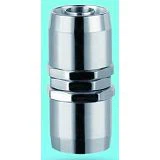
Now, let's talk about fuel nozzle swivel joints. These are essential components in fueling systems. They allow the fuel nozzle to move freely in different directions, making it easier to connect and disconnect from the fueling point. They also help in reducing stress on the fuel hose and preventing kinking, which can block the flow of fuel.
So, can these swivel joints be used in cryogenic fuel applications? The answer is, it depends. There are several factors to consider before using a fuel nozzle swivel joint in a cryogenic environment.
Material Compatibility
The first and most crucial factor is material compatibility. At cryogenic temperatures, many materials become brittle and lose their flexibility. Metals like carbon steel, for example, can become extremely brittle and may crack under stress. So, for cryogenic applications, we need to use materials that can withstand these low temperatures without losing their mechanical properties.
Stainless steel is a popular choice for cryogenic applications. It has good strength and ductility at low temperatures, which means it can bend and stretch without breaking. Another option is aluminum. Aluminum is lightweight and has a relatively high thermal conductivity, which can help in dissipating heat. You can check out our Swivel Fuel Nozzle Aluminium for more details on aluminum swivel joints.
Sealing
Sealing is another critical aspect. At cryogenic temperatures, the expansion and contraction of materials can cause seals to leak. A good seal is essential to prevent the escape of cryogenic fuel, which can be not only dangerous but also wasteful.
We use special sealing materials that are designed to work at low temperatures. These materials can maintain their elasticity and sealing properties even in the coldest conditions. For example, some seals are made from elastomers that have been formulated to resist the effects of cryogenic temperatures.
Design Considerations
The design of the swivel joint also plays a vital role. In cryogenic applications, the swivel joint needs to be designed to minimize heat transfer. Heat transfer can cause the cryogenic fuel to warm up and vaporize, which can lead to pressure build-up and potential safety hazards.
We design our swivel joints with insulating materials and proper clearances to reduce heat transfer. Additionally, the design should allow for easy maintenance and inspection, as cryogenic systems require regular checks to ensure safe operation.
Testing
Before using a fuel nozzle swivel joint in a cryogenic application, it is essential to conduct thorough testing. Testing helps to ensure that the swivel joint meets the required performance standards and can operate safely in the intended environment.
We subject our swivel joints to a series of tests, including cryogenic temperature cycling, pressure testing, and leak testing. These tests simulate the actual operating conditions and help us identify any potential issues before the product is deployed.


Advantages of Using Fuel Nozzle Swivel Joints in Cryogenic Applications
If all the above factors are carefully considered and addressed, using a fuel nozzle swivel joint in cryogenic applications can offer several advantages.
Firstly, it provides flexibility in fueling operations. The swivel joint allows the fuel nozzle to be easily positioned, which can save time and effort during the fueling process. This is especially important in applications where quick and efficient fueling is required, such as in the aerospace industry.
Secondly, it helps in reducing wear and tear on the fuel hose. By allowing the nozzle to move freely, the swivel joint reduces the stress on the hose, which can extend its lifespan and reduce maintenance costs.
Other Related Products
In addition to fuel nozzle swivel joints, we also offer other products that are essential for cryogenic fuel systems. Fuel Hose Couplers are used to connect the fuel hose to the swivel joint and the fuel source. They need to be made from materials that are compatible with cryogenic fuels and can provide a secure and leak-free connection.
Fuel Nozzle Coupling is another important component. It connects the fuel nozzle to the swivel joint and ensures a smooth flow of fuel. Our fuel nozzle couplings are designed to be easy to install and remove, which is crucial for efficient fueling operations.
Conclusion
In conclusion, a fuel nozzle swivel joint can be used in cryogenic fuel applications, but it requires careful consideration of material compatibility, sealing, design, and testing. At our company, we have the expertise and experience to provide high-quality swivel joints that are suitable for cryogenic environments.
If you are in the market for fuel nozzle swivel joints for cryogenic applications or any other fueling systems, we'd love to hear from you. Whether you have questions about our products, need a custom solution, or are ready to place an order, don't hesitate to reach out. Contact us today to start a conversation about your fueling needs and how we can help you find the perfect solution.
References
- ASME Boiler and Pressure Vessel Code, Section VIII, Division 1: Rules for Construction of Pressure Vessels
- ASTM International standards for cryogenic materials testing
- Technical literature from aerospace and cryogenic fuel system manufacturers