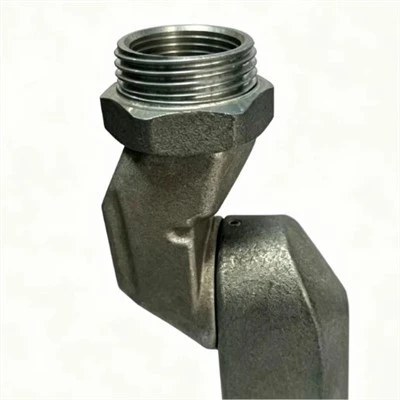
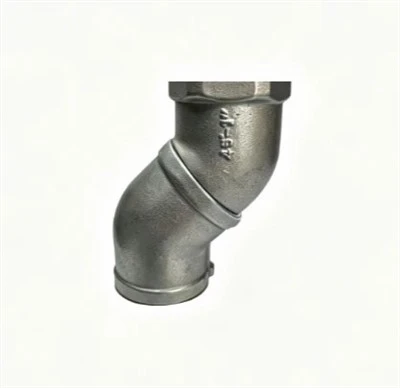
In the bustling environment of gas stations, we often witness the phenomenon of "running fuel nozzles." This is not fiction but a real safety hazard. Safety breakaway couplings prevent accidents caused by careless drivers forgetting to disconnect fuel nozzles, automatically disconnecting and self-sealing to ensure safe refueling operations. A Critical Role in Gas Station Safety
The breakaway valve automatically disconnects, with both disconnected parts featuring self-sealing capabilities. Typically installed on fuel dispensers, gas dispensers, or gas/fuel dispensing columns, this device prevents leakage accidents caused by excessive hose strain, providing specialized protection.
Types of Breakaway Valves and Tensile Requirements
The breakaway valve, a critical safety device, is usually installed on fuel hoses or at the connection point between the nozzle and hose. Its primary function is to prevent potential accidents caused by forgetting to remove the nozzle after refueling a vehicle. Breakaway valves are categorized into nozzle breakaway valves and hose breakaway valves. Their separation force must range between 800N and 1500N to avoid damaging the fuel dispenser or hose, or compromising their protective function. Depending on their installation location, breakaway valves can be categorized as nozzle breakaway valves or hose breakaway valves. However, the breakaway force must be appropriately calibrated-neither too low nor too high. Insufficient force may cause unintended disengagement during events like fueling water hammer, compromising protection. Conversely, excessive force may fail to adequately safeguard the fuel dispenser, hose, and connection fittings. Therefore, we must adhere to the provisions of the national standard GB22380.2-2010, "Explosion-Proof Safety Technology for Fueling Stations - Part 2: Safety Requirements for Structure and Performance of Safety Breakaway Valves for Fuel Dispensers," ensuring the breakaway force of safety breakaway valves is maintained within the reasonable range of 800N to 1500N.
Installation and Usage Precautions for Breakaway Valves
When installing and using breakaway valves, strictly adhere to relevant standards and specifications to ensure their safe and effective protective function. Installation and operation must comply with standards, including regular inspection and maintenance. Adding protective devices is strictly prohibited. Ensure connectors remain intact, prevent contamination, and maintain temperatures within specified ranges. Regular inspection and maintenance are also essential to keep breakaway valves in optimal condition. Regularly inspect the breakaway valve. If loosening occurs, perform maintenance or replacement immediately. Adding any protective devices to the breakaway valve is strictly prohibited, as it may impair normal operation. Do not disassemble quick-connect fittings arbitrarily. Ensure hoses are intact to prevent leaks or detachment due to cracks. Use only clean, suitable fluids that have passed through filters. Operating temperatures for breakaway valves must be strictly maintained within specified ranges. Prevent contamination from metal powders, dust, or other impurities that could compromise performance or cause leaks. When installing threaded breakaway valves, ensure tightening torque does not exceed the maximum specified value to prevent potential damage.