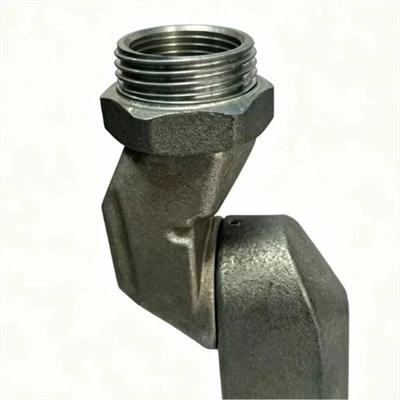
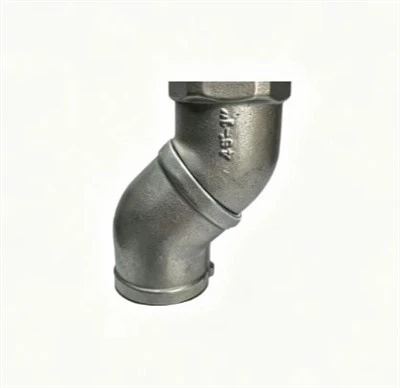
Picture a high-traffic gas station at rush hour. A driver yanks the nozzle toward a distant fuel tank, and the rubber hose twists into a rigid, stubborn knot. Without Hose Swivels, that stress travels straight to the coupling, inviting a structural failure. These aren't just "parts"; they are the mechanical joints that absorb every pull and twist. By allowing the nozzle to spin freely, they shield the expensive hose from fatigue. In my experience, a fuel line equipped with a high-grade swivel outlasts a fixed connection by nearly double, simply because it stops fighting the operator's movements.
What is the real difference between a standard joint and a multi-plane model?
It comes down to the geometry of the "swing." A basic single-plane joint handles the circular rotation, but if you need the nozzle to tilt and pivot simultaneously, you move to multi-plane Hose Swivels. Look closely at the finish: a professional-grade unit often features a distinct nickel-plated aluminum sheen, chosen not for looks, but to survive the corrosive bite of modern additives. Inside, the secret is the Viton O-ring. If that seal isn't chemically compatible with the fuel, the swivel becomes a leak source rather than a solution. We see more facilities switching to these high-spec intermediate joints because they demand zero-leak performance under 24/7 high-pressure cycles.
How to get the installation right without stripping the threads?
Forget the "more is better" approach with wrenches. To install Hose Swivels correctly, you start with clean threads-one grain of sand can ruin the seal. Apply a thin layer of fuel-resistant sealant, then hand-tighten until it seats. Only then do you apply a wrench to meet the specific torque; over-tightening is the fastest way to crush the internal bearings and freeze the rotation. Looking ahead, the industry is moving toward "smart" swivels capable of monitoring flow turbulence. For now, sticking to a strict inspection of the swivel's "spin feel" remains the best way to prevent a catastrophic blowout on the forecourt.