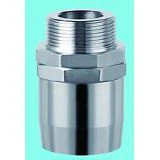
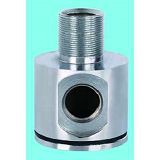
Can a fuel nozzle coupling be repaired? This is a question that often arises in the fuel handling industry, and as a fuel nozzle coupling supplier, I'm here to provide a detailed and scientific answer.
Understanding Fuel Nozzle Couplings
Fuel nozzle couplings are critical components in fuel transfer systems. They are designed to connect the fuel nozzle to the fuel hose or other components of the fueling infrastructure. These couplings need to ensure a secure and leak - proof connection, as well as withstand the pressures and chemical properties of the fuels they handle.
There are different types of fuel nozzle couplings, each with its own design and functionality. For instance, the Fuel Nozzle Swivel is a specialized coupling that allows the fuel nozzle to rotate, which is very useful in applications where flexibility is required during fueling. Another type is the Hose Fitting Connector for Fuel, which is used to establish a reliable connection between the fuel hose and the nozzle or other system parts.
The materials used in fuel nozzle couplings are carefully selected to be compatible with various fuels, such as gasoline, diesel, and jet fuel. Common materials include stainless steel, brass, and certain polymers, which offer corrosion resistance and durability.
Common Issues with Fuel Nozzle Couplings
Over time, fuel nozzle couplings can experience several problems. One of the most common issues is leakage. Leaks can occur due to wear and tear on the seals or gaskets within the coupling. As the coupling is repeatedly connected and disconnected, the seals may become damaged, allowing fuel to escape. This not only poses a safety hazard but also leads to fuel loss.


Another problem is corrosion. If the coupling is exposed to a corrosive environment or incompatible fuels, the metal parts can start to corrode. Corrosion can weaken the structure of the coupling, making it more prone to failure. Additionally, debris or contaminants can enter the coupling, causing blockages or interfering with its normal operation. For example, small particles in the fuel can get trapped in the moving parts of a Multi Plane Swivel, preventing smooth rotation.
Possibility of Repair
The possibility of repairing a fuel nozzle coupling depends on several factors. In the case of minor seal or gasket damage, repair is often feasible. Seals and gaskets can usually be replaced relatively easily. Many fuel nozzle couplings are designed in a way that allows for easy access to these components. By replacing the worn - out seals, it is possible to restore the coupling's leak - proof function.
If the damage is due to corrosion on the outer surface of the coupling, in some cases, the affected area can be cleaned and treated with anti - corrosion coatings. However, if the corrosion has penetrated deep into the material and weakened the structure, repair may not be a viable option as it would compromise the safety and integrity of the coupling.
When it comes to blockages caused by debris, the coupling can often be disassembled, cleaned thoroughly, and then reassembled. This process requires careful attention to ensure that all parts are properly cleaned and that no debris remains that could cause future problems.
For more complex issues, such as internal mechanical damage to a swivel mechanism or a severely damaged connecting thread, the feasibility of repair becomes more questionable. In some cases, the cost of repair, including the labor and replacement parts, may be close to or even higher than the cost of a new coupling.
Factors to Consider Before Repairing
Before deciding to repair a fuel nozzle coupling, several factors should be considered. Safety is of utmost importance. A repaired coupling must meet all the relevant safety standards and regulations. If there is any doubt about the safety of the repaired coupling, it is better to replace it with a new one.
The cost - effectiveness of the repair is another crucial factor. As mentioned earlier, if the cost of repair is too high, it may be more economical to purchase a new coupling. The availability of replacement parts also plays a role. If the required parts are difficult to obtain, it may make the repair process time - consuming and impractical.
The expected lifespan of the repaired coupling is also important. If the coupling has already been in use for a long time and has experienced multiple issues, it may not be worth repairing as it is likely to face more problems in the near future.
The Role of a Supplier in Repair and Replacement
As a fuel nozzle coupling supplier, we play an important role in helping our customers make the right decisions regarding repair and replacement. We can provide technical advice on whether a particular coupling can be repaired or if it is better to replace it. Our knowledge of the products allows us to assess the extent of the damage accurately.
In addition to advice, we also offer a wide range of replacement parts. Whether it is a seal, a gasket, or a more complex component, we can supply the necessary parts to facilitate the repair process. We also ensure that all our products, including replacement parts, meet the highest quality standards.
Conclusion
In conclusion, a fuel nozzle coupling can often be repaired, especially in cases of minor seal damage, blockages, or surface - level corrosion. However, the decision to repair or replace should be based on factors such as safety, cost - effectiveness, availability of parts, and the expected lifespan of the coupling.
If you are facing issues with your fuel nozzle couplings and are unsure whether to repair or replace them, we are here to help. Our technical team can provide detailed guidance and assistance. We invite you to contact us for further discussions on your fuel nozzle coupling needs and to explore the best solutions for your specific situation. Whether you need advice on repair, replacement parts, or new couplings, we are ready to support you.
References
- Industry standards for fuel handling and coupling design.
- Manufacturer's guidelines for fuel nozzle couplings.