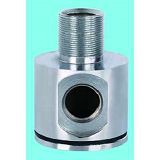
As a supplier of low hanging oil sights, I've encountered numerous inquiries from customers about the possible signs and implications related to their equipment's oil systems. One question that frequently arises is whether a low hanging oil sight can be a sign of a blocked oil passage. In this blog, I'll explore this topic in detail, drawing on my experience in the industry and relevant scientific knowledge.


Understanding Low Hanging Oil Sights
Low hanging oil sights are essential components in many industrial and mechanical systems. They provide a visual indication of the oil level in a reservoir, allowing operators to monitor the oil status easily. These devices come in various types and designs, such as the Two Window Oil Sight, Aluminum Four Window Oil Sight, and Four Window Oil Sight. Each type has its own advantages and is suitable for different applications.
The normal operation of a low hanging oil sight involves the oil flowing into the sight glass, where the level can be observed. The sight glass is designed to be in communication with the oil reservoir, and the oil level in the sight glass should reflect the actual level in the reservoir under normal conditions.
Possible Causes of a Low Hanging Oil Sight Reading
A low reading on a low hanging oil sight can be caused by multiple factors. One of the most obvious reasons is a low oil level in the reservoir. This could be due to oil leakage, improper oil filling, or excessive oil consumption. For example, if there is a leak in the oil system, the oil will gradually escape, leading to a decrease in the oil level in the reservoir and subsequently a low reading on the oil sight.
Another possible cause is a malfunction of the sight glass itself. The sight glass may be clogged, damaged, or have a faulty connection to the oil reservoir. A clogged sight glass can prevent the oil from flowing freely into it, resulting in an inaccurate low reading.
The Link Between a Low Hanging Oil Sight and a Blocked Oil Passage
Now, let's focus on the relationship between a low hanging oil sight and a blocked oil passage. A blocked oil passage can indeed cause a low reading on the oil sight. When an oil passage is blocked, the flow of oil is restricted. This can prevent the oil from reaching the sight glass or the reservoir at a normal rate.
For instance, in a complex oil circulation system, if there is a blockage in the pipeline that connects the oil pump to the reservoir, the oil may not be able to be pumped into the reservoir effectively. As a result, the oil level in the reservoir will drop, and the low hanging oil sight will show a low reading.
In some cases, the blockage may not completely stop the oil flow but reduce it significantly. This can lead to a slow and inconsistent oil supply to the sight glass, causing the oil level in the sight glass to fluctuate or remain low.
Identifying a Blocked Oil Passage
To determine whether a blocked oil passage is the cause of a low hanging oil sight reading, several steps can be taken. First, a visual inspection of the oil system can be carried out. Look for any signs of blockages such as debris, sludge, or foreign objects in the oil lines, filters, or valves.
Pressure testing can also be a useful method. By measuring the pressure at different points in the oil system, it can be determined if there is a significant pressure drop, which may indicate a blockage. Additionally, analyzing the oil flow rate can provide valuable information. If the flow rate is lower than normal, it could be a sign of a blocked passage.
Preventing Blocked Oil Passages
Preventive measures are crucial to avoid blocked oil passages and the associated problems. Regular maintenance of the oil system is essential. This includes changing the oil and filters at recommended intervals, cleaning the oil lines, and inspecting the valves for proper operation.
Using high - quality oil is also important. Low - quality oil can contain more impurities, which are more likely to cause blockages over time. Additionally, installing proper filtration systems can help remove contaminants from the oil before they can cause problems in the oil passages.
The Importance of Addressing a Blocked Oil Passage
Ignoring a blocked oil passage can lead to serious consequences. A restricted oil flow can cause insufficient lubrication in the mechanical components, resulting in increased friction and wear. This can lead to premature component failure, reduced equipment efficiency, and even safety hazards.
For example, in a large industrial engine, a blocked oil passage can cause the engine bearings to overheat and seize, leading to a complete breakdown of the engine. Therefore, it is crucial to address any signs of a blocked oil passage as soon as possible.
Our Role as a Low Hanging Oil Sight Supplier
As a supplier of low hanging oil sights and related products, we understand the importance of providing high - quality components that can help in accurately monitoring the oil system. Our Two Window Oil Sight, Aluminum Four Window Oil Sight, and Four Window Oil Sight are designed to be reliable and easy to use.
We also offer technical support to our customers. If you are experiencing issues with your oil sight or suspect a blocked oil passage, our team of experts can provide guidance on troubleshooting and maintenance. We can help you determine the root cause of the problem and recommend the best solutions.
Contact Us for Your Oil Sight Needs
If you are in the market for high - quality low hanging oil sights or need further information about oil system monitoring and maintenance, we encourage you to reach out to us. Our team is ready to assist you with your procurement needs and answer any questions you may have. Whether you are a small business or a large industrial enterprise, we can provide the right solutions for your oil sight requirements.
References
- Machinery's Handbook, 31st Edition, Industrial Press Inc.
- Lubrication Fundamentals, Second Edition, John W. Murphy