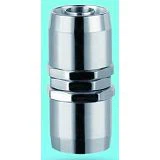
Hey there! As a supplier of Ordinary Rupture Valves, I've had my fair share of customers asking about the differences between an Ordinary Rupture Valve and a single - seated valve. So, I thought I'd write this blog to clear up any confusion and help you make an informed decision when it comes to choosing the right valve for your needs.


Let's start with the basics. An Ordinary Rupture Valve is designed to protect a system from over - pressure situations. It's like a safety net for your pipelines and equipment. When the pressure in the system exceeds a pre - set limit, the rupture disc in the valve bursts, allowing the excess pressure to escape and preventing damage to the system.
On the other hand, a single - seated valve is a type of control valve. It's mainly used to regulate the flow of fluids (liquids or gases) in a pipeline. The valve has a single plug that moves up and down to open or close the valve, controlling the amount of fluid that can pass through.
Construction and Design
One of the most obvious differences between the two is their construction. An Ordinary Rupture Valve is relatively simple in design. It consists of a rupture disc, a holder, and a body. The rupture disc is the key component. It's made of a thin metal or plastic membrane that is designed to fail at a specific pressure. Once the disc bursts, the valve is no longer functional and needs to be replaced.
A single - seated valve, however, is more complex. It has a valve body, a stem, a plug, and a seat. The plug is attached to the stem, and when the stem moves, the plug either seals against the seat to stop the flow or moves away from the seat to allow flow. The design of the single - seated valve allows for precise control of the flow rate, which is crucial in many industrial processes.
Functionality
The functionality of these two valves also differs significantly. As I mentioned earlier, the main function of an Ordinary Rupture Valve is safety. It's a one - time use device that provides emergency relief in case of over - pressure. It doesn't control the flow under normal operating conditions. For example, in a gas storage tank, if the pressure inside the tank rises due to a malfunction, the rupture valve will burst and release the excess gas, preventing the tank from exploding.
A single - seated valve, on the other hand, is all about control. It can be adjusted to maintain a specific flow rate, pressure, or level in a system. In a chemical processing plant, a single - seated valve can be used to control the amount of reactants entering a reactor, ensuring that the chemical reaction proceeds at the right pace.
Applications
The applications of these valves are also different. Ordinary Rupture Valves are commonly used in industries where over - pressure protection is critical. This includes the oil and gas industry, chemical plants, and power generation facilities. For instance, in an oil refinery, they are used to protect pipelines and equipment from pressure surges that could cause leaks or explosions.
Single - seated valves are used in a wide range of industries for flow control. They are found in water treatment plants, HVAC systems, and food and beverage processing. In a water treatment plant, a single - seated valve can be used to control the flow of water through different treatment stages, ensuring that the water is properly treated before it's distributed.
Maintenance and Cost
Maintenance is another area where these two valves differ. An Ordinary Rupture Valve requires very little maintenance under normal conditions. However, once the rupture disc has burst, the entire valve needs to be replaced. This can be costly, especially if the valve is large or made of special materials.
A single - seated valve, on the other hand, requires regular maintenance. The valve needs to be inspected for wear and tear, and the packing around the stem may need to be replaced periodically to prevent leaks. But the advantage is that the valve can be repaired and reused, which can save costs in the long run.
In terms of cost, an Ordinary Rupture Valve is generally cheaper upfront. But considering the cost of replacement after a rupture, the overall cost over time can be significant. A single - seated valve is more expensive initially, but with proper maintenance, it can last for a long time, making it a cost - effective choice in the long term.
When to Choose Which
So, how do you decide which valve is right for you? If safety is your top priority and you need a reliable way to protect your system from over - pressure, an Ordinary Rupture Valve is the way to go. It provides a simple and effective solution for emergency relief.
If you need to control the flow of fluids in your system, then a single - seated valve is the better option. It allows for precise control and can be adjusted to meet the specific requirements of your process.
At our company, we offer a wide range of Ordinary Rupture Valves to meet different needs. We also have other related products like the Gas Emergency Shut Off Valve and the Emergency Dual Shut Off Valve. These valves are designed to provide reliable performance and ensure the safety of your systems.
If you're in the market for a valve and need some advice, don't hesitate to reach out. We have a team of experts who can help you choose the right valve for your application. Whether you need an Ordinary Rupture Valve for over - pressure protection or a single - seated valve for flow control, we've got you covered. Let's have a chat and see how we can work together to meet your valve needs.
References
- Valve Handbook: A Guide to Valve Selection and Application, 3rd Edition
- Industrial Valves: Design, Operation, and Maintenance, 2nd Edition
- Pressure Relief Valves: Theory and Practice, 4th Edition