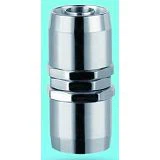
Pipeline check valves play a crucial role in fluid flow control across a wide range of industries. As a leading supplier of pipeline check valves, I have witnessed firsthand the impact these valves have on ensuring the efficient and safe operation of fluid systems. In this blog post, I will delve into the various ways in which pipeline check valves contribute to fluid flow control.
Understanding Pipeline Check Valves
Pipeline check valves are mechanical devices designed to allow fluid to flow in one direction while preventing backflow. They are typically installed in pipelines to ensure that fluid moves in the desired direction and to protect equipment from damage caused by reverse flow. Check valves operate automatically, opening when the fluid pressure in the forward direction exceeds a certain threshold and closing when the pressure reverses.
There are several types of pipeline check valves, each with its own unique design and operating principle. Some common types include swing check valves, lift check valves, ball check valves, and diaphragm check valves. Each type is suitable for different applications and operating conditions, and the choice of valve depends on factors such as the type of fluid, flow rate, pressure, and temperature.
Preventing Backflow
One of the primary functions of pipeline check valves is to prevent backflow. Backflow can occur when the pressure in the downstream side of a pipeline exceeds the pressure in the upstream side, causing the fluid to flow in the reverse direction. This can lead to a variety of problems, including contamination of the fluid, damage to equipment, and reduced system efficiency.
Pipeline check valves prevent backflow by allowing fluid to flow in one direction only. When the fluid pressure in the forward direction exceeds the cracking pressure of the valve, the valve opens and allows fluid to pass through. When the pressure reverses, the valve closes, preventing the fluid from flowing back. This ensures that the fluid flows in the desired direction and protects the system from the negative effects of backflow.
Maintaining System Pressure
Pipeline check valves also play a crucial role in maintaining system pressure. In many fluid systems, it is important to maintain a constant pressure to ensure the proper operation of equipment and to prevent damage to the system. Check valves help to maintain system pressure by preventing the loss of fluid due to backflow.
When the fluid pressure in the system drops below a certain level, the check valve closes, preventing the fluid from flowing back and maintaining the pressure in the system. This helps to ensure that the system operates at the desired pressure and prevents damage to equipment caused by low pressure.
Protecting Equipment
Pipeline check valves are also used to protect equipment from damage caused by backflow. In many fluid systems, equipment such as pumps, compressors, and turbines are designed to operate in one direction only. Backflow can cause damage to these equipment by reversing the flow of fluid and causing the equipment to operate in the wrong direction.
Pipeline check valves prevent backflow and protect equipment from damage by allowing fluid to flow in one direction only. When the fluid pressure in the forward direction exceeds the cracking pressure of the valve, the valve opens and allows fluid to pass through. When the pressure reverses, the valve closes, preventing the fluid from flowing back and protecting the equipment from damage.
Controlling Flow Rate
Pipeline check valves can also be used to control the flow rate of fluid in a pipeline. In some applications, it is important to control the flow rate of fluid to ensure the proper operation of equipment and to prevent damage to the system. Check valves can be used to control the flow rate by opening and closing at specific pressure differentials.
For example, a check valve can be designed to open when the fluid pressure in the forward direction exceeds a certain threshold and to close when the pressure drops below a certain level. This allows the valve to control the flow rate of fluid in the pipeline and to ensure that the system operates at the desired flow rate.
Improving System Efficiency
Pipeline check valves can also improve the efficiency of fluid systems by reducing energy consumption and minimizing pressure losses. In many fluid systems, energy is required to pump the fluid through the pipeline. Backflow can cause the fluid to flow in the reverse direction, increasing the energy required to pump the fluid and reducing the efficiency of the system.
Pipeline check valves prevent backflow and reduce energy consumption by allowing fluid to flow in one direction only. This helps to ensure that the fluid flows in the desired direction and reduces the energy required to pump the fluid through the pipeline. Additionally, check valves can minimize pressure losses by reducing the resistance to fluid flow in the pipeline.
Applications of Pipeline Check Valves
Pipeline check valves are used in a wide range of applications across various industries. Some common applications include:


- Water and wastewater treatment: Check valves are used in water and wastewater treatment plants to prevent backflow and to ensure the proper operation of pumps and other equipment.
- Oil and gas industry: Check valves are used in oil and gas pipelines to prevent backflow and to protect equipment from damage caused by reverse flow.
- Chemical processing: Check valves are used in chemical processing plants to control the flow of fluids and to prevent the mixing of different chemicals.
- Power generation: Check valves are used in power generation plants to prevent backflow and to ensure the proper operation of pumps and turbines.
- HVAC systems: Check valves are used in HVAC systems to prevent backflow and to ensure the proper operation of pumps and other equipment.
Our Pipeline Check Valve Products
As a leading supplier of pipeline check valves, we offer a wide range of high-quality products to meet the needs of our customers. Our products include New Type Check Valve, Foot Pedal Hydraulic Valve, and Triangle Check Valve.
Our check valves are designed and manufactured to the highest standards of quality and reliability. They are made from high-quality materials and are tested to ensure that they meet or exceed industry standards. Our products are available in a variety of sizes and configurations to meet the specific needs of our customers.
Contact Us for Purchase and Negotiation
If you are interested in purchasing our pipeline check valves or have any questions about our products, please feel free to contact us. Our team of experts is available to provide you with more information about our products and to help you choose the right valve for your application. We look forward to working with you and providing you with the best possible products and services.
References
- Crane Co. (2012). Flow of Fluids Through Valves, Fittings, and Pipe. Technical Paper No. 410M.
- Spirax Sarco. (2019). Steam Engineering Tutorials. Retrieved from https://www.spiraxsarco.com/resources/steam-engineering-tutorials
- Valves Magazine. (2021). The Basics of Check Valves. Retrieved from https://www.valvesmagazine.com/article/14274481/the-basics-of-check-valves